
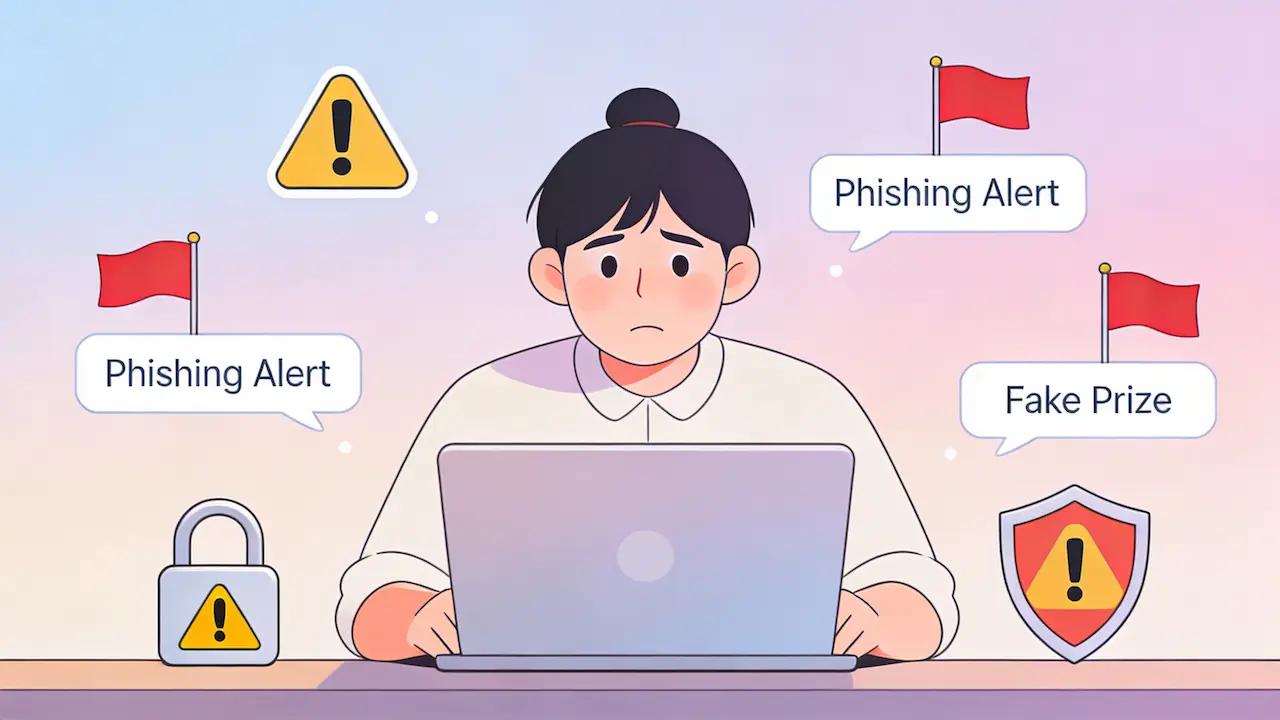
The internet is making our lives much easier, a lot faster, and more connected. However, it has also made it easier for scammers to reach millions of people.
In the USalone, reported cybercrime cases nearly doubled in just a few years. Cases rose from about 467,000 in 2019 to more than 880,000 in 2023. In fact, in 2024, Americans lost over $3 billion to scams that began online. And every day, people lose not only money but also time, confidence, and peace of mind to digital tricks.
These scams rarely look dangerous at first. Many appear friendly, professional, and even helpful, which is why so many intelligent and cautious people still fall for them.
Of course, most scams follow clear patterns. Once you know what to look for, you can spot trouble quickly. Let’s walk you through five common online scams and show you how they work and how to recognize them instantly.
#1 Phishing Scams
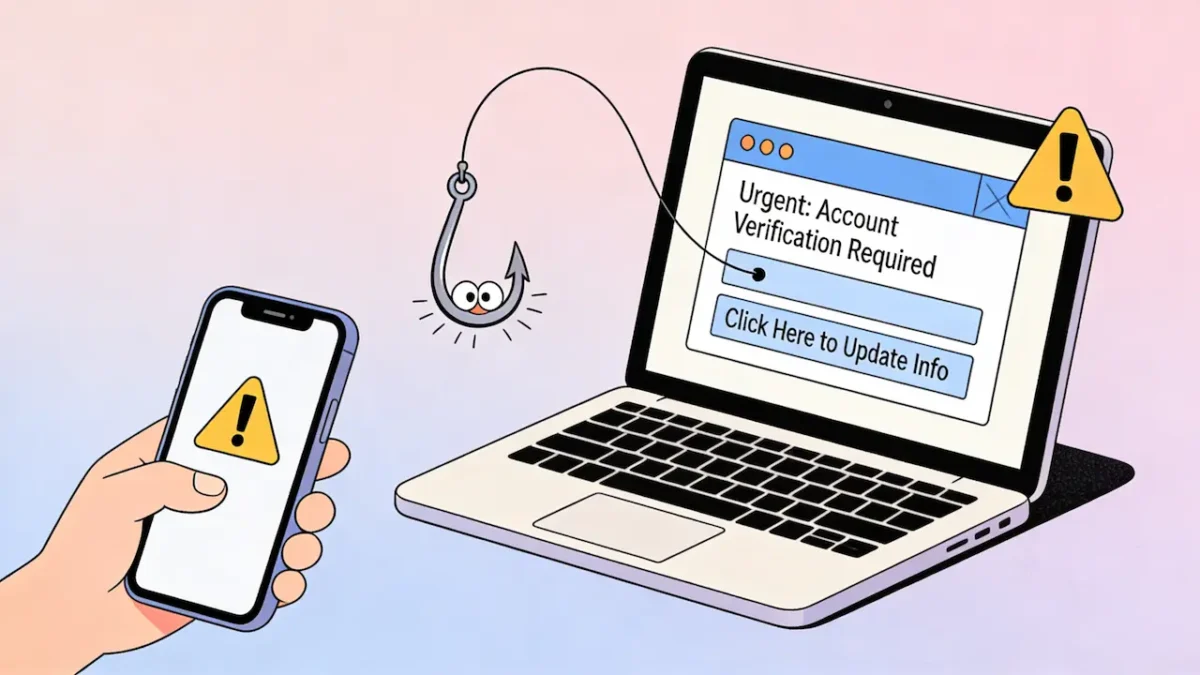
Phishing scams are one of the oldest and most common online tricks. They usually show up in emails, text messages, or on social media. The message is designed to look like it’s legit, but it’s not.
No matter how it’s worded, the real goal is always to steal your personal information, such as passwords, card details, or login credentials. These scams often rely on pressure and fear, trying to make you act quickly before you have time to think.
Pay attention to odd links, poor spelling, and vague greetings. When something feels urgent or suspicious, pause and check it carefully before responding.
#2 Fake Online Shopping Scams
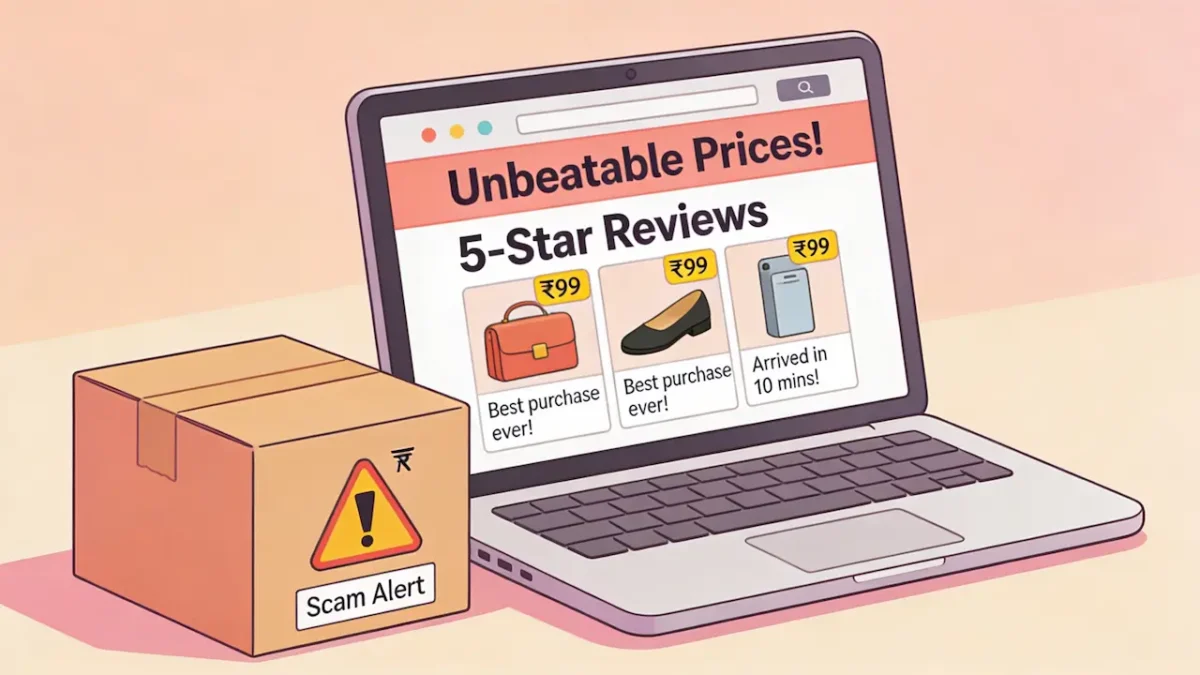
Fake stores and ads are everywhere. The deal looks too good to ignore. You click, order, and pay. Then nothing arrives. Sometimes you receive a cheap imitation instead. These websites often copy real brands and layouts. They may use stolen photos and fake reviews.
You might notice missing contact details or strange payment methods. Always check the website address carefully. Search for reviews outside the site. Avoid stores that only accept direct transfers or gift cards. If a seller pressures you to pay quickly, that is a serious warning sign.
#3 Pig Butchering Scams
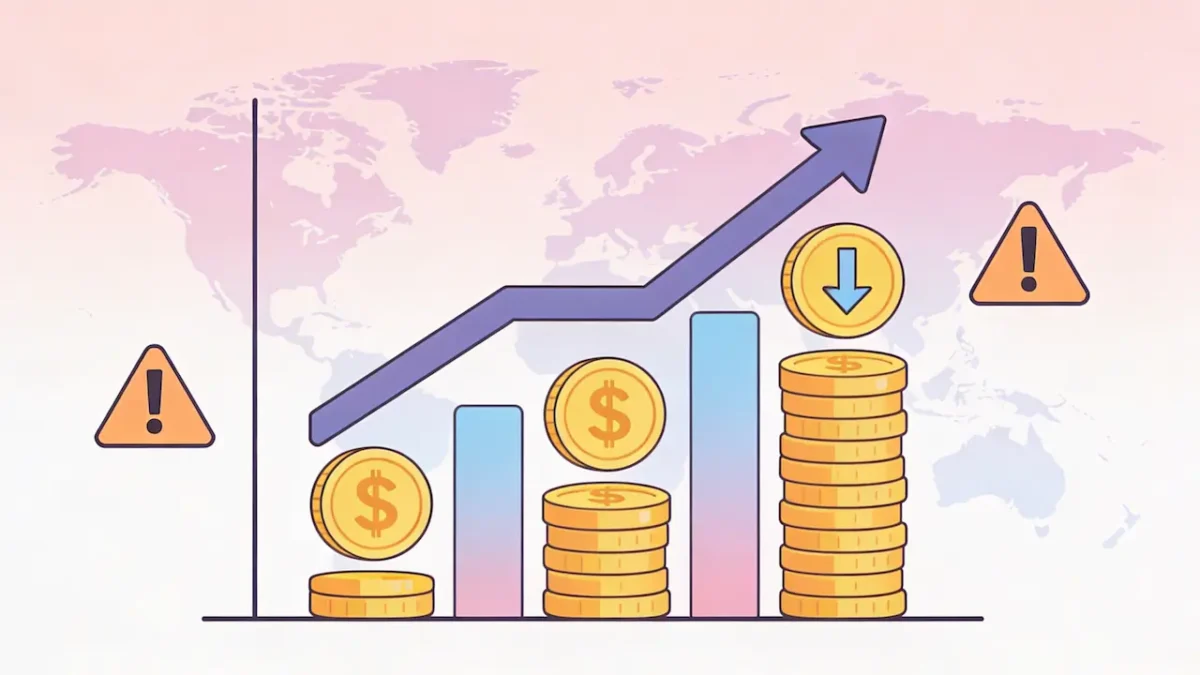
A pig butchering scam is one of the most dangerous online scam types today. In these pig butchering scams, scammers slowly build trust with victims. They often start through dating apps or social media. They act friendly, caring, and patient. Over time, they talk about investment opportunities.
According to TorHoerman Law, many such scams involve cryptocurrency investment scam schemes or fake trading platforms. The goal is to lure victims into sending money. At first, the platform may show fake profits, and this makes victims believe the investment works. Then the scammers encourage larger deposits.
Eventually, the money disappears. These investment scams are carefully planned. They combine emotional manipulation and financial lies. If someone online pushes you toward secret investments, walk away immediately.
#4 Tech Support Scams
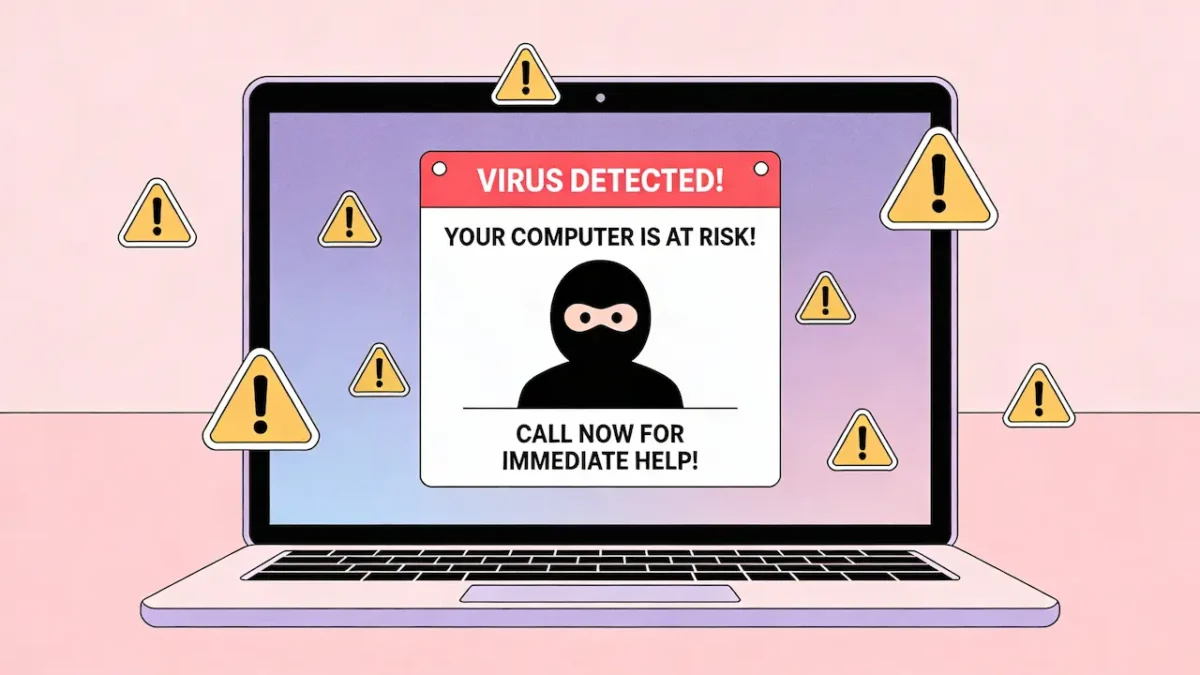
Tech support scams usually start with fear. You may see a pop-up warning about viruses or hacking. Sometimes you get a call claiming to be from a software company. The person says your device is in danger. They offer immediate help.
Once you agree, they ask for remote access. They may install fake tools or steal your data. Then they demand payment for useless services. These scams rely on panic. Real companies do not monitor your computer this way. They do not cold-call users.
If you see alarming messages, close the browser. Restart your device. Contact official support channels directly. Never give control of your device to strangers online.
#5 Job and Work from Home Scams

In the US, losses due to job scams increased more than threefold between 2020 and 2023. Moreover, in just the first half of 2024, losses resulting from job scams topped $220 million.
Job scams target people looking for flexible or remote work. They promise high income for little effort. You might see ads for typing jobs, surveys, or package handling.
After applying, you are quickly accepted. That should already raise suspicion. Then they ask for registration fees, training costs, or equipment payments. Sometimes they send fake checks and ask you to return part of the money. Later, the check bounces. You lose your own funds.
Real employers do not charge you to work. They do not rush hiring without interviews. Always research companies before sharing documents. If a job sounds unrealistically easy, it probably is.
FAQs
How to identify a scammer online?
You can identify a scammer online by watching for urgent messages, unrealistic offers, and requests for personal information. Scammers often avoid video calls, use poor grammar, and pressure you to act quickly. Always verify identities, check links carefully, and trust your instincts.
What are common scammer phrases?
Common scammer phrases include “Act now,” “Limited time offer,” “You’ve won a prize,” and “Verify your account immediately.” They often say “Don’t tell anyone” or “Urgent payment required.” These phrases create fear or excitement to manipulate victims into making quick, risky decisions.
If you reply to a scammer, can they hack you?
Simply replying to a scammer usually does not hack your device. However, it shows them you are active, which may lead to more scams. Clicking links, downloading files, or sharing information is risky. It’s safest to block, report, and avoid further communication.
Online scams are becoming more creative every year. Scammers study human behavior and use it against us. They know how to sound polite, confident, and convincing. That is why awareness is your best defense.
Be cautious with investments and job offers. Never share sensitive information without proof. Trust your instincts when something feels wrong. Protecting yourself online does not require advanced skills. It only requires attention and patience.
