History books preserve what happened, but they rarely capture how it felt to live through those moments. A written account of a historical event provides facts and chronology, yet the actual human experience — the conversations, the hesitations, the small decisions that cascaded into consequence — exists between the lines.
Text to video generation bridges that gap by allowing historical narratives to become rendered footage that shows what those moments might have looked like when they were actually happening.
Dreamina’s Seedance 2.5 model was built to understand the specific demands of historical storytelling — balancing accuracy with human drama, rendering documented facts through character interaction, transforming historical accounts into cinematic scenes where history becomes visible as lived experience rather than just recorded event.
Why historical stories need cinematic rendering
A historian reading primary documents understands context and consequence. A general reader encounters those same documents as fragments without full coherence. A cinematic rendering transforms those fragments into a unified experience where a viewer can see how one moment connects to another, how individual people responded to historical circumstances, how human psychology shaped historical events. That visualization doesn’t replace historical scholarship — it makes scholarship accessible by rendering it visually.
This is particularly valuable for historical narratives that exist as written accounts but rarely as visual material. A famous conversation between historical figures exists only as quoted text. A pivotal moment in someone’s life might be described in a letter or memoir. Text to video allows these textual accounts to become generated footage that shows those moments as though they were filmed when they actually occurred.
Character as gateway to historical understanding
Historical events are driven by people making decisions under pressure. A person reading about the Civil War absorbs facts. A person watching two historical figures argue about slavery, each believing they’re defending something essential, suddenly understands how reasonable people could hold opposing positions on something now obviously immoral. That character-driven understanding makes history viscerally comprehensible in ways facts alone cannot achieve.
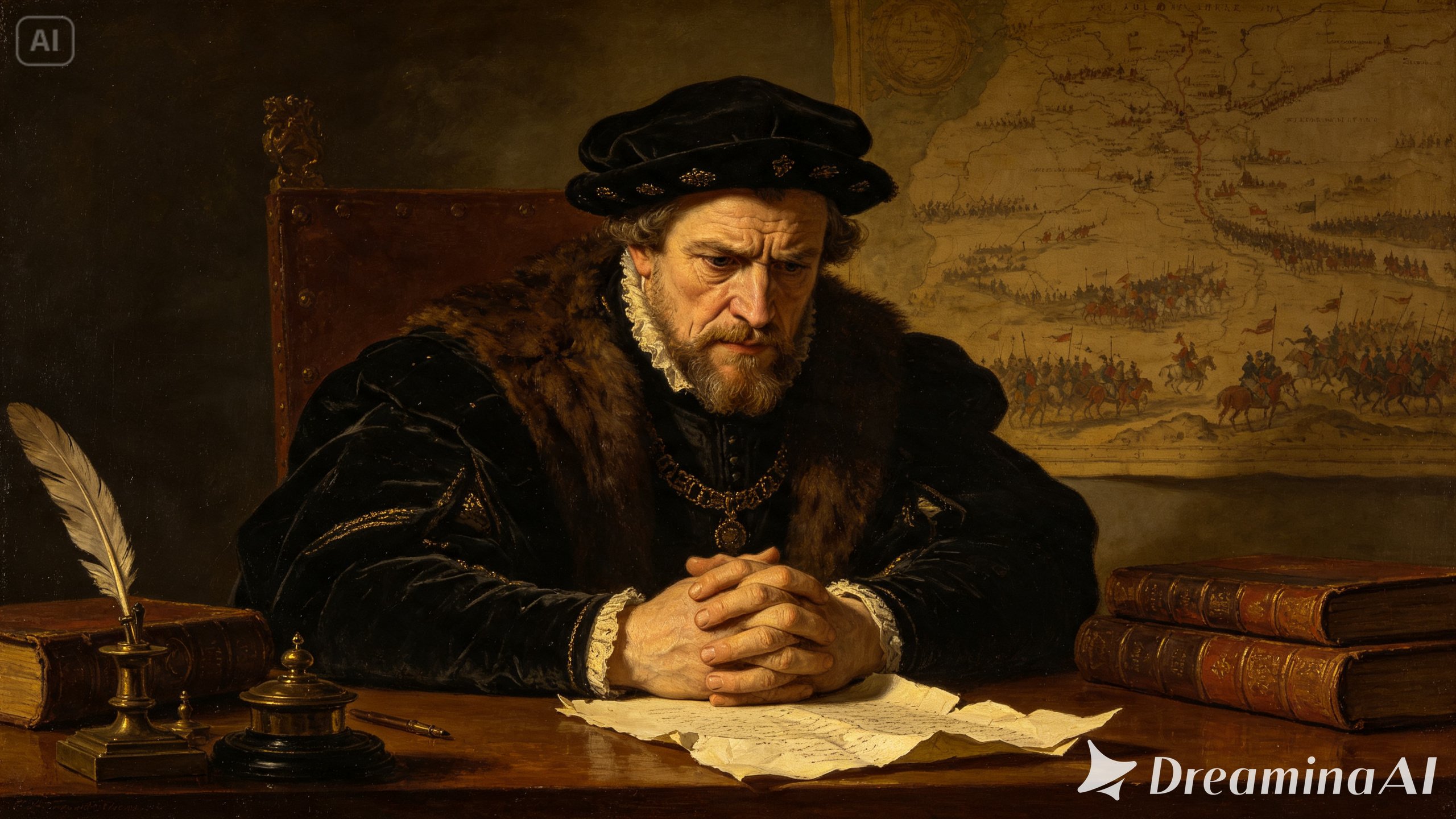
Text to video allows historical characters to become visible as actual people rather than names in textbooks. A prompt can describe “a historical figure grappling with a decision they knew would alter their life, showing uncertainty and moral weight through their expressions, revealing that historical figures were people facing genuine choices rather than inevitable historical agents.”
Dialogue as historical documentation
Many historical moments exist primarily through recorded dialogue. Letters, speeches, documented conversations, diplomatic exchanges — these textual records are the primary historical material. Rendering that dialogue visually transforms documentation into dramatization while remaining faithful to the historical record. A famous quote delivered by an actor becomes different from reading the same quote on a page — the delivery adds emotional and psychological dimension.
Text to video allows historical dialogue to be rendered with emotional precision. A prompt can specify “these historically documented words delivered with the emotional weight they would have carried in person, the hesitations and emphases that would have made this statement persuasive to its actual audience.” That specificity creates dialogue that feels historically authentic rather than theatrical.
Setting as historical evidence
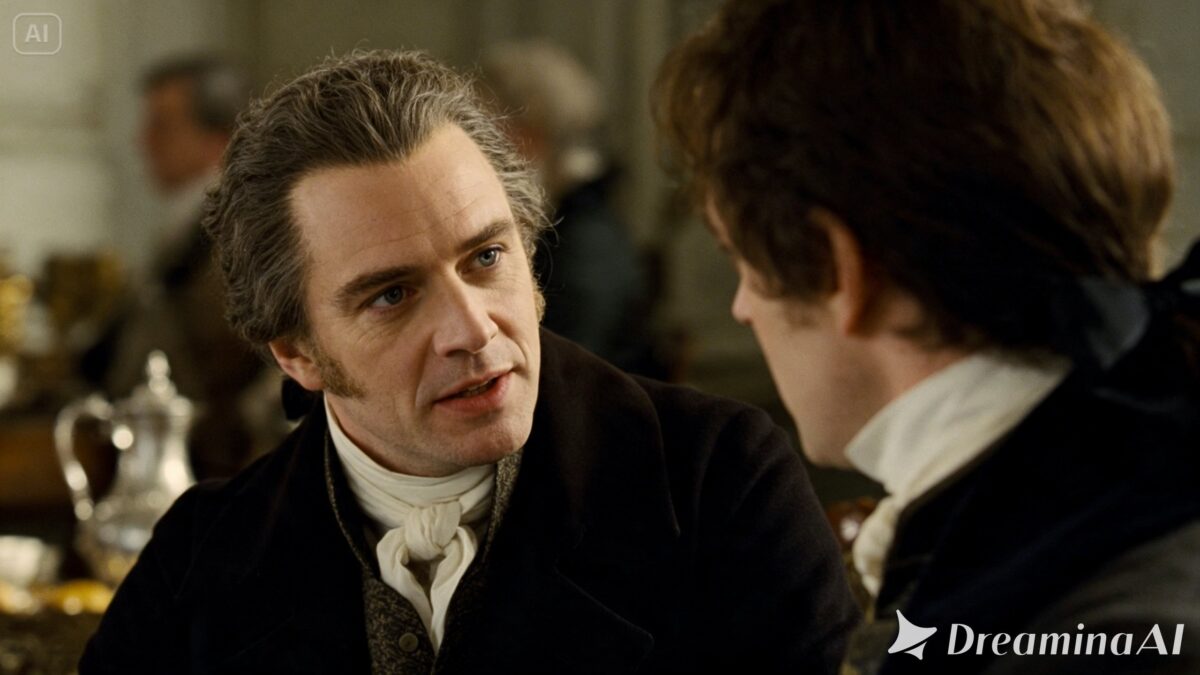
A space communicates information about the era it belongs to. Architecture, furnishings, lighting sources, the arrangement of objects — all of this reveals technological capabilities, economic conditions, social values, and daily life of a historical period. A richly detailed historical setting shows more about a time period than exposition could communicate.
Text to video allows settings to be specified with historical precision. A prompt can describe “a room showing both wealth and constraint of the era, objects indicating what was available and valued, lighting reflecting actual historical light sources, the space revealing social class and historical moment through accumulated detail.”
Seedance 2.5’s historical storytelling mastery
Seedance 2.5 was engineered to render historical narratives with the authenticity and human complexity that makes history come alive cinematically.
- Period-accurate dialogue delivery — Dialogue rendered with emotional weight and period-appropriate pacing, making historical words feel spoken rather than quoted
- Authentic period physicality — Gesture and movement reflecting actual historical era, avoiding modern mannerisms that would break historical immersion
- Facial expression communicating historical psychology — Emotions readable through subtle shifts, showing historical figures as psychologically complex people
- Setting detail revealing historical context — Architecture, objects, and spatial arrangement communicating information about the era through visual evidence
- Extended duration for narrative development — Historical moments benefit from time allowing complexity to unfold and understanding to deepen
Bringing history to life: From page to screen
This is where historical scholarship transforms into visual narrative. Converting historical accounts and stories into cinematic scenes requires understanding history deeply, selecting moments where human drama reveals historical significance, and rendering those moments with both accuracy and emotional authenticity.
Step 1: Extract your historical moment and build your prompt
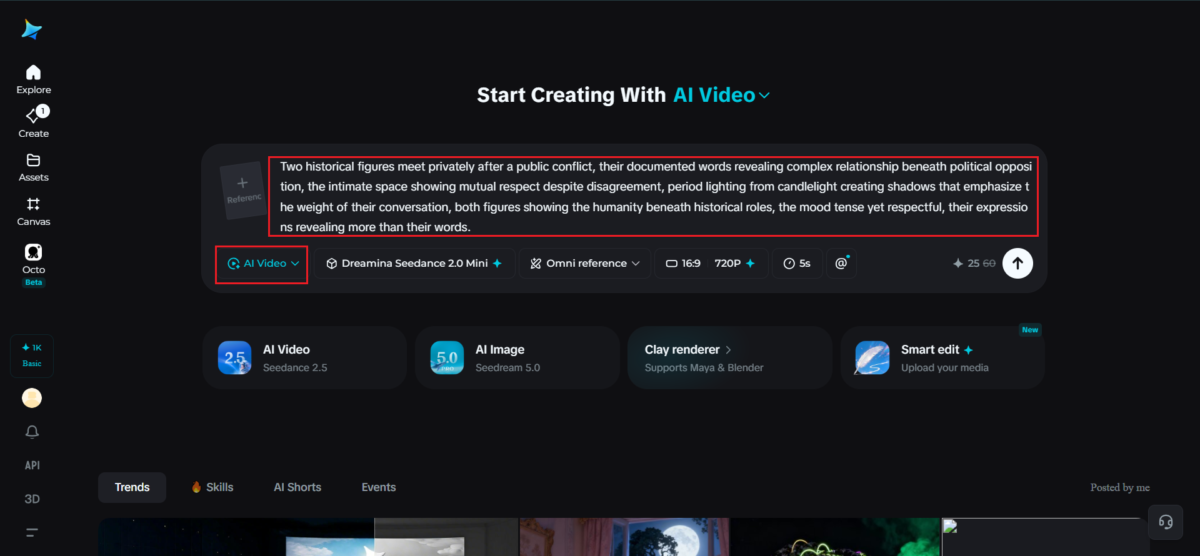
Visit Dreamina, sign in, and head to the “AI Video” section. Identify the historical moment you want to render — a conversation, a decision, an encounter between historical figures. Click “Add reference image” if you have period artwork, photographs, or architectural references. Write your prompt describing what’s documented, what’s reasonably inferred, the emotional stakes, and the historical significance without requiring viewers to understand the context.
A detailed prompt for 30 seconds might read: Two historical figures meet privately after a public conflict, their documented words revealing complex relationship beneath political opposition, the intimate space showing mutual respect despite disagreement, period lighting from candlelight creating shadows that emphasize the weight of their conversation, both figures showing the humanity beneath historical roles, the mood tense yet respectful, their expressions revealing more than their words.
Step 2: Generate your historical scene with Seedance 2.5
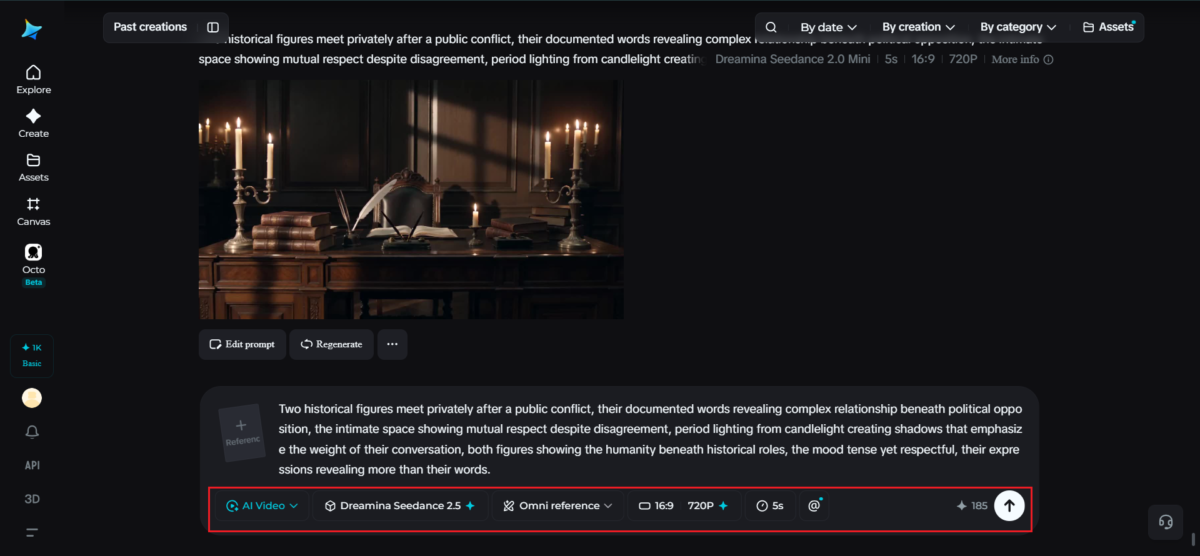
Select the Seedance 2.5 model for generation. Choose 30-60 seconds depending on how much narrative space your historical moment needs. Pick 16:9 for historical content or educational platforms, 9:16 for social sharing. Click Dreamina’s generation icon and watch your historical account become rendered footage.
Step 3: Verify historical authenticity and enhance
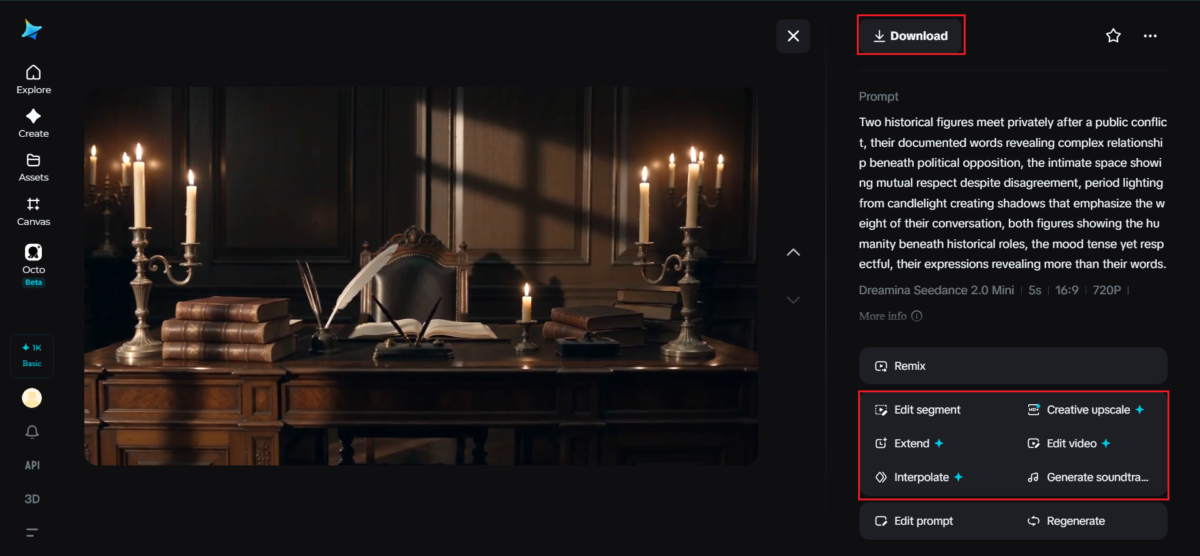
Use Dreamina’s AI editing tools to strengthen period details. Upscale sharpens facial expressions and period details that communicate historical authenticity, while Generate Soundtrack adds period-appropriate ambient audio. Confirm the scene feels historically grounded and emotionally authentic. Export and share.
Balancing drama with documented fact
The tension in historical storytelling exists between what’s documented and what’s dramatically necessary. Too much adherence to bare facts creates wooden scenes.
Too much dramatization violates historical integrity. The balance requires understanding what’s actually known and being transparent about inference, letting that transparency strengthen rather than weaken the storytelling.
When history becomes experiential
History transforms when viewers can see and experience historical moments rather than just reading about them.
With Dreamina and its Seedance 2.5 model, historical stories documented in text become cinematic scenes where history emerges as lived experience, allowing text to video to bring the human dimension of history into visible form.