
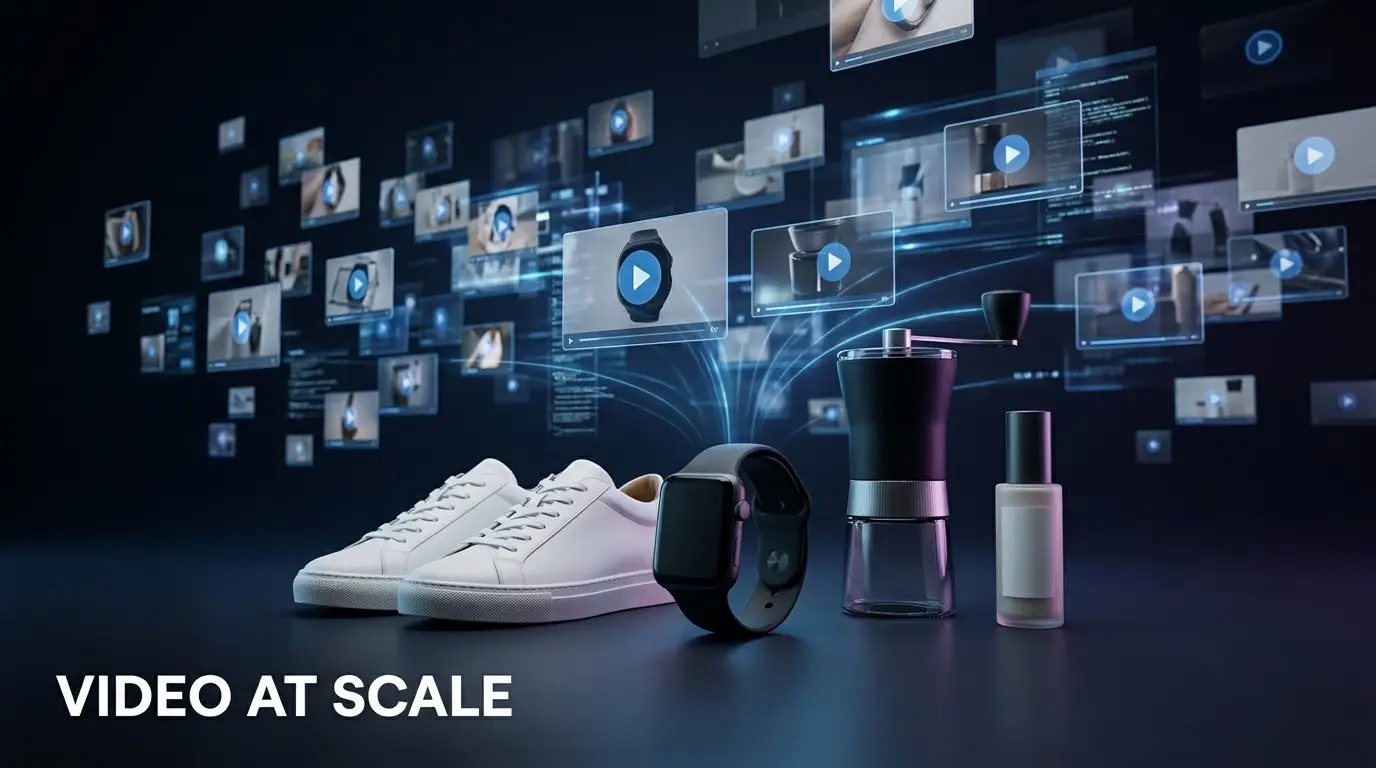
Most merchants agree that product pages convert better with video. Very few have video on more than a fraction of their catalogue. The reason is arithmetic rather than disagreement: a store with three thousand SKUs, each needing a thirty-second clip at conventional production rates, is looking at a project that costs more than its annual marketing budget and takes longer than the product lifecycle. So video goes on the top twenty bestsellers, the long tail stays static, and the conversion gap between them widens every quarter. That constraint has started to loosen in a way worth examining closely.
The Long Tail Is Where the Margin Hides
Bestsellers get attention because they’re visible. The financial reality in most catalogues is less obvious: a substantial share of profit sits in mid-tier products with thin competition and healthier margins than the traffic drivers.
Those items rarely receive creative investment because they don’t individually justify it. A product doing forty units a month cannot support a bespoke shoot. Aggregate four hundred such products, though, and the collective revenue dwarfs the hero SKU everyone obsesses over.
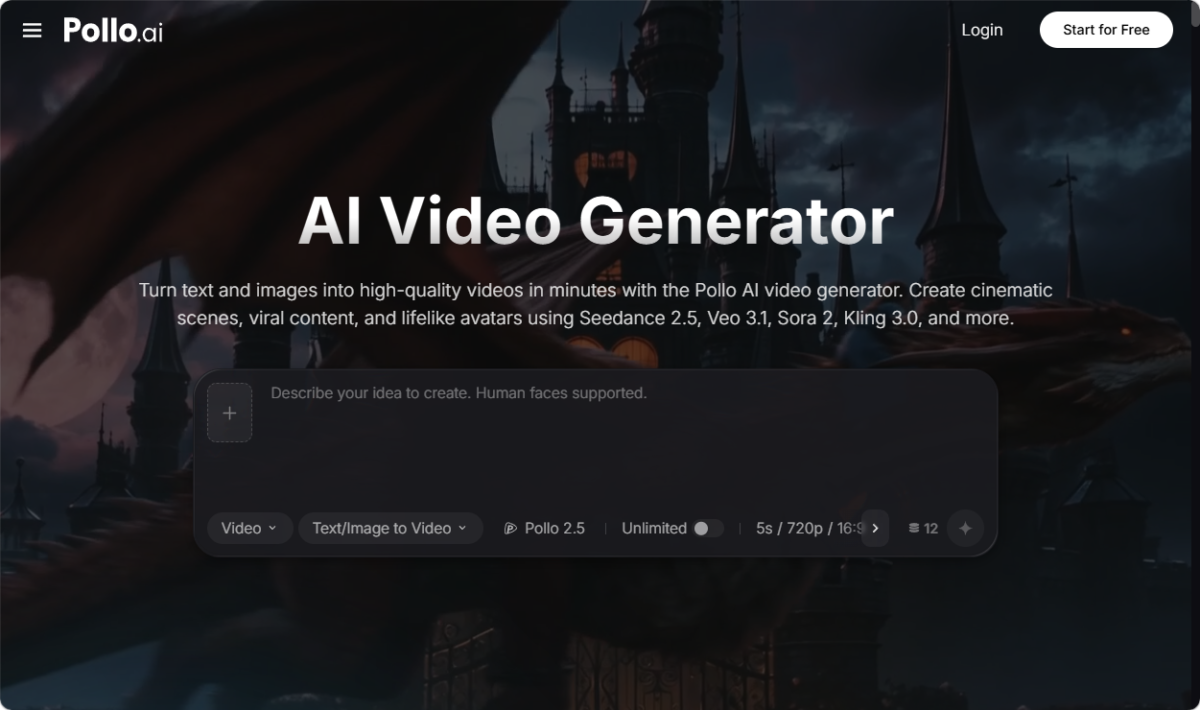
This is precisely where automated production changes strategy rather than just cost. Pollo AI’s AI Video Generator consolidates a broad set of creation methods — turning written specifications or existing product photography into moving footage, restyling clips into new visual treatments, and generating reference-anchored sequences that keep a product looking identical across every shot — inside one platform rather than a chain of separate applications. For catalogue work, that last property is the important one, since a customer comparing two variants notices immediately if the item appears to change between videos.
Consistency Is a Merchandising Requirement, Not a Preference
In editorial contexts, visual variation is desirable. In catalogue contexts it’s a defect. A shopper moving between listings expects the same framing, the same lighting logic, the same pacing, so that differences they perceive are genuine product differences.
That’s why template thinking, borrowed from photography studios, transfers directly. Studios standardised product shots decades ago precisely because comparison shopping demands it. Video is simply catching up.
The operational consequence is that catalogue video should be designed as a system, not as a series of creative decisions. One shot structure, one duration, one motion vocabulary, applied across thousands of items. Creativity belongs in the campaign layer above it.
Where Cross-Border Selling Multiplies the Problem
Add markets and the maths deteriorates fast. A catalogue that needs video in five languages isn’t a five-fold increase in editing — it’s a five-fold increase in scripting, recording, subtitling and review, plus the version control burden of keeping them synchronised when a product spec changes.
Most merchants respond by localising only the top of the catalogue and running everything else in English, which quietly caps performance in every non-primary market.
Automated generation doesn’t remove the need for translation quality control, but it does move localisation from a production task to a configuration task, which is the difference between something happening annually and something happening continuously.
The Standardised Layer of Merchant Communication
Beyond product pages, e-commerce operations generate a steady stream of video that isn’t creative at all: policy explainers, seasonal shipping notices, supplier onboarding, warehouse training, affiliate briefings, partner recruitment.

Biteable is built for that layer and complements Pollo AI rather than overlapping with it. Its cloud architecture supports genuinely industrial throughput — in the region of two hundred thousand videos monthly — while its AI assistant converts a text brief or a supplied URL into a finished branded video. Automatic layout enforcement keeps every output within brand guidelines regardless of who produced it, an extensive animated asset library covers most business scenarios, and clickable calls to action can be placed inside the video itself, which suits agencies producing standardised deliverables for many merchant clients simultaneously.
For teams servicing multiple stores, that repeatability is the whole value proposition. Product storytelling and operational messaging are different disciplines and are better handled by different systems.
Building a Repeatable Catalogue Video Pipeline
Rank SKUs by Video Return, Not by Revenue
Before producing anything, score products on how much video could plausibly help. Items with complex mechanics, size ambiguity, texture variation or high return rates gain most. Simple, well-understood commodities gain least. A high-revenue product everyone already understands may deserve video less than a mid-tier item generating constant pre-sale questions. This ranking prevents the common mistake of automating the wrong half of the catalogue first.
Write One Shot Template and Reuse It Ruthlessly
Define a fixed structure — establishing angle, detail pass, scale reference, in-use context — with set durations for each beat. Then apply it universally. Within Pollo AI’s AI Video Generator, keeping the same reference conditions across a category means the entire product line renders with matched framing and lighting, so a customer browsing twelve listings sees twelve comparable presentations rather than twelve creative interpretations.
Handle Variants Through Substitution, Not Regeneration
For colourways, sizes and material options, change only the referenced input and hold everything else fixed. Regenerating a variant from scratch introduces drift, and drift on a variant page directly causes returns. Treat the template as the constant and the product image as the single changing element.
Separate Product Output From Business Output
Route anything that isn’t a product presentation elsewhere in the workflow. Shipping updates, seller onboarding, training modules and partner briefings belong with a system such as Biteable, where enforced brand layouts, multilingual voice options and in-frame conversion buttons match the requirement better than open-ended generation. Keeping the two pipelines distinct protects both throughput and brand consistency.
Measure Before You Scale Further
The final discipline is resisting the urge to video everything simply because it’s now feasible. Instrument a controlled sample — a hundred listings with video against a matched hundred without — and track conversion rate, time on page and return rate over a full purchase cycle.
Some categories will show clear lift. Others will show almost nothing, and knowing which is which is worth more than blanket coverage. Ecommerce product video is a tool with variable returns, not a universal upgrade.
What has genuinely changed is that the experiment is now affordable. The catalogue tail that was priced out of visual investment for two decades can finally be tested, and the merchants who test carefully rather than exhaustively will be the ones who learn something useful from it.
